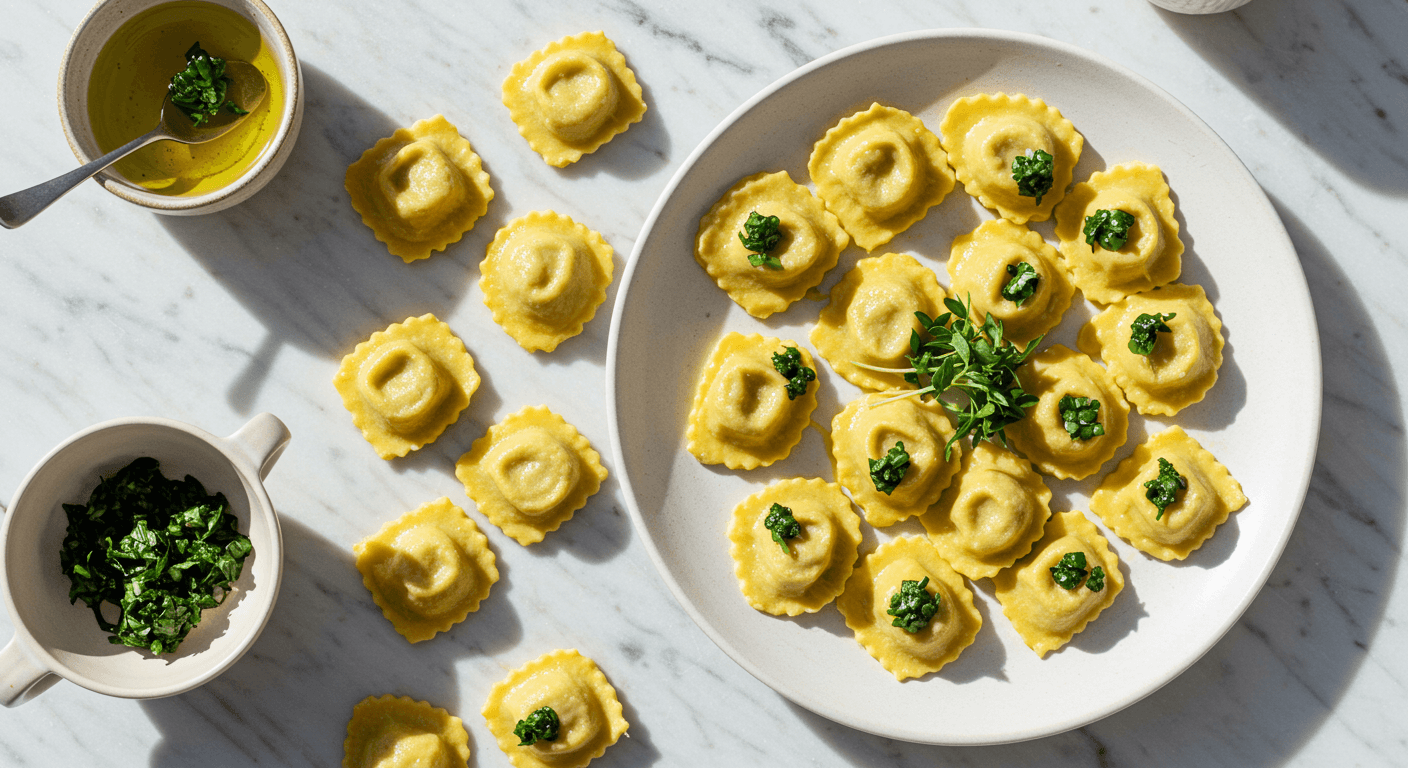
Decadent French Laundry-Inspired Chicken & Ricotta Agno... | Simmerfy
Decadent French Laundry-Inspired Chicken & Ricotta Agnolotti
This recipe brings the luxurious experience of The French Laundry's housemade pasta to your home kitchen, featuring a rich chicken and ricotta filling encased in delicate fresh pasta.
Prep: 1 hour 30 min
Cook: 20 min
Total: 1 hour 50 min
4 servings
Ingredients
FOR THE PASTA DOUGH:
2 cups (240g) all-purpose flour, plus more for dusting
3 large eggs, at room temperature
1 tablespoon olive oil
1/2 teaspoon salt
FOR THE FILLING:
1 cup shredded cooked chicken (from 1 small rotisserie chicken breast)
1. PREPARE THE FILLING: In a medium bowl, combine the shredded cooked chicken, drained ricotta, Parmesan cheese, mashed roasted garlic (or garlic powder), chives, thyme, nutmeg, salt, and pepper. Mix until well combined. Cover and refrigerate while you prepare the pasta dough.
2
2. MAKE THE PASTA DOUGH: On a clean work surface or in a large bowl, mound the flour. Make a well in the center. Crack the eggs into the well, then add the olive oil and salt. Using a fork, gently whisk the wet ingredients, gradually incorporating the flour from the sides of the well until a shaggy dough forms.
3
3. KNEAD THE DOUGH: Transfer the dough to a lightly floured surface. Knead for 8-10 minutes, or until the dough is smooth and elastic. If it's too sticky, add a tiny bit more flour; if too dry, a few drops of water. Form the dough into a ball, wrap tightly in plastic wrap, and let it rest at room temperature for at least 30 minutes (up to 1 hour). This relaxes the gluten, making it easier to roll.
4
4. ROLL THE PASTA: Divide the dough into 4 equal portions. Work with one portion at a time, keeping the others covered. Lightly flour your work surface and the dough. If using a pasta machine, flatten the dough with your hand or a rolling pin and pass it through the widest setting. Fold the dough into thirds and pass it through again. Repeat this 2-3 times. Then, gradually decrease the roller setting, passing the dough through each setting until you reach the second-to-last or thinnest setting (usually setting 7 or 8 on most machines), creating long, thin sheets. If rolling by hand, use a rolling pin to roll the dough as thinly as possible into long, roughly rectangular sheets.
5
5. FORM THE AGNOLOTTI: Lay a pasta sheet on a lightly floured surface. Place small dollops (about 1/2 teaspoon) of the chilled filling along one long edge of the pasta sheet, about 1 inch apart, leaving a 1/2 inch border from the edge. Lightly brush the dough around the filling with a little water. Carefully fold the long edge of the pasta sheet over the filling, aligning the edges to create a long, filled tube. Gently press down between each mound of filling to seal the dough and remove any air pockets. Press firmly along the top seam to seal the dough completely.
6
6. CUT THE AGNOLOTTI: Using a fluted pasta wheel or a sharp knife, cut between each sealed filling mound to create individual agnolotti. You can then gently pinch the top seam of each agnolotti to create the traditional 'plin' or pinch shape, if desired. Place the formed agnolotti on a lightly floured baking sheet, ensuring they don't touch, while you repeat with the remaining dough and filling. If not cooking immediately, cover and refrigerate for up to an hour, or freeze on the baking sheet until solid, then transfer to a freezer bag for longer storage.
7
7. MAKE THE SAUCE: In a large skillet, melt the butter over medium heat. Once it starts to foam, add the sage leaves. Cook, swirling occasionally, until the butter turns a nutty brown color and the sage leaves are crisp, about 3-5 minutes. Be careful not to burn it. Remove from heat.
8
8. COOK THE AGNOLOTTI: Bring a large pot of heavily salted water to a rolling boil. Carefully add the agnolotti to the boiling water. Cook for 2-4 minutes, or until they float to the top and are tender but still have a slight bite (al dente). Do not overcrowd the pot; cook in batches if necessary.
9
9. FINISH AND SERVE: Using a slotted spoon, transfer the cooked agnolotti directly into the skillet with the brown butter and sage. Add 1/4 cup of the pasta cooking water and toss gently to coat, allowing the sauce to emulsify. Season with a pinch of salt and pepper. Serve immediately, garnished with fresh Parmesan cheese.
Nutrition Facts
700 kcal
Calories
40g
Protein
70g
Carbs
35g
Fat
Want to customize this recipe?
Make it vegan, keto, allergen-free, or adjust servings with AI.